
Dean of Faculty Candidates
Kelley Musick
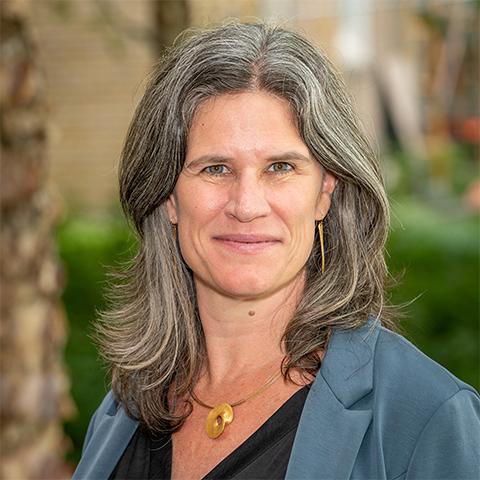
I am Professor of Public Policy and Sociology in the Brooks School of Public Policy. I started my career at the University of Southern California and joined Cornell in 2008 as Associate Professor in the Department of Policy Analysis and Management (PAM), where I was later promoted to full Professor and served as Chair. With the founding of the Brooks School, I served as its inaugural Senior Associate Dean of Research. I have a Master of Public Affairs from Princeton and Ph.D. in Sociology from the University of Wisconsin–Madison.
My research examines family change and inequality over the life course. My recent work focuses on the transition to parenthood, how it shapes economic security, time use, and health, and how these patterns vary across social groups and institutional contexts in the U.S. and other countries. Across these questions, I am interested in how gender and other forms of inequality operate—and what we can do to better support the health and well-being of families. My research has been funded by the National Institutes of Health, the Russell Sage Foundation, and the Swedish Research Council, and has been published in journals reaching interdisciplinary and policy audiences.
Much of my leadership experience has focused on institution-building during periods of change. I recently completed a four-year term as Senior Associate Dean of Research in the Brooks School. As part of the inaugural leadership team, I helped create academic and operational structures, shape faculty governance, and set strategic priorities with lasting impact on the future of Brooks. In my research portfolio, I put in place infrastructure to support faculty research on wide-ranging global policy issues. As Chair of PAM, a multidisciplinary department of about 30 faculty, I navigated the disruptions of the COVID pandemic and a major restructuring of the social sciences that culminated in the founding of the Brooks School. Amidst these changes, I spent time listening to and learning from students, staff, and faculty. I advocated for our people and programs, developed policies and practices to better support early career development, and strengthened initiatives around belonging.
Training and mentoring the next generation have been priorities throughout my career, including as past Director of the Cornell Population Center and Cornell lead of the Center for Aging and Policy Studies. In some of the work I have found most meaningful, I co-direct NextGenPop, an NIH-funded research program that rotates across five institutions and supports undergraduates who might otherwise have limited exposure to population science. We are preparing for our fifth summer and have a five-year renewal application under review. NextGenPop has become a widely recognized and highly competitive pipeline program in the population field with broad support aimed at substantially changing the face of population research.
Cornell has been central to my professional life, and I am now also a proud Cornell parent. As of this fall, both my children will be undergraduates in Duffield Engineering.
Candidate Statement:
The opportunity to serve as Dean of Faculty draws together priorities that have shaped my career: supporting faculty development, strengthening research, nurturing the next generation, and fostering communities of belonging. It is a critical time for higher education, with significant challenges to the way we do our research, train our students, and engage with the public. I would approach the Dean of Faculty role with a deep respect for the faculty and commitment to transparency, fairness, and shared governance. I would work to amplify faculty perspectives and strengthen collaboration across campus, guided by Cornell’s founding principle of “any person… any study” and core values of open inquiry and exploration.
My leadership roles at Cornell have prepared me for this position. As the inaugural Senior Associate Dean of Research in the Brooks School of Public Policy, I helped shape the school’s strategic plan and infrastructure for research. As Chair of Policy Analysis and Management, I worked with colleagues across campus on the restructuring of the social sciences that led to the creation of Brooks. Across these roles, I led initiatives to foster belonging, including new mechanisms for data collection and accountability. I have prioritized listening to students, staff, and faculty, building connections to solve problems, and promoting engagement and transparency in decision-making. As Dean of Faculty, I would bring a collaborative approach to the role rooted in service to the faculty and commitment to Cornell.
Learn More:
https://publicpolicy.cornell.edu/people/kelly-musick/
Chris B. Schaffer
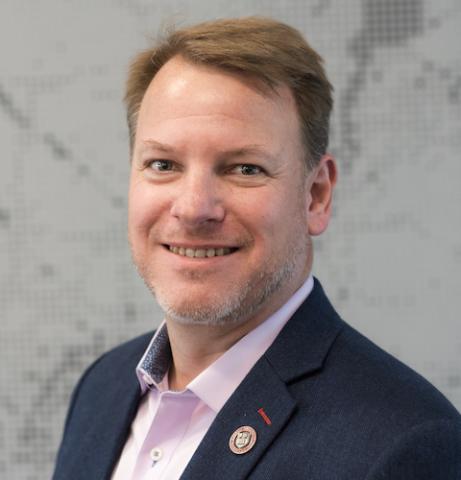
Chris B. Schaffer is the Meinig Family Professor of Engineering in the Meinig School of Biomedical Engineering at Cornell University. Trained in physics at the University of Florida and Harvard, with postdoctoral training in neuroscience at UC San Diego, he co-leads a research laboratory with Prof. Nozomi Nishimura that develops advanced optical approaches to study cellular interactions in mouse models of disease and applies these tools to elucidate the cellular mechanisms contributing to neurological disorders, including Alzheimer’s disease and microvascular stroke. His laboratory is supported by the NIH, NSF, and the Alzheimer’s Association. He is a Fellow of Optica, the American Institute of Medical and Biological Engineering, and the American Association for the Advancement of Science.
Chris has been deeply engaged in university governance during his 20 years at Cornell, including as a member of the Faculty Senate for most of that time and serving on the University Faculty Committee. He also served a three-year term as Associate Dean of the Faculty, where his work included increasing the representation and voice of Research, Teaching, and Extension faculty within university governance processes, revising policies for adjudicating misconduct accusations in Greek life, and strengthening institutional approaches to preventing sexual harassment. Chris has also served as a faculty voice in university decision-making during periods of significant institutional stress. He was the Senate-nominated faculty representative to the university-wide committee on reopening research and scholarship activities following the COVID-19 shutdown in summer 2020, helping to restore research operations under challenging, rapidly evolving conditions. In 2024, he was the Senate-nominated representative to the university-wide Expressive Activities committee, which developed policies and procedures governing expressive activity through a year-long consultative process. He has contributed in multiple ways to reducing sexual misconduct, including more than a decade of service on Title IX panels and as Cornell’s faculty representative to the National Academies Action Collaborative to Prevent Sexual Harassment in Higher Education. Across these shared governance roles, Chris has developed a reputation for substantive engagement, careful listening, and creative problem-solving on complex institutional issues.
Beyond faculty governance, Chris has held significant academic leadership roles, including Director of Graduate Studies in Biomedical Engineering, where he led curriculum reform, secured multiple education-focused training grants, and implemented holistic admissions practices that increased diversity in the PhD program. He has long been engaged in pedagogical innovation, adopting active-learning approaches in his courses and leading externally funded programs that enhance STEM education through graduate student partnerships with schools and community institutions, including a current NIH-funded partnership with the Ithaca Sciencenter to build an exhibit on biomedical engineering. Chris’s contributions to research, teaching, and mentoring have been recognized with multiple college- and university-level awards, including the Kendall S. Carpenter Award for advising. Chris also spent a sabbatical year working as a science policy advisor for Senator Edward Markey in the US Congress under an AAAS fellowship, providing experience with federal policy processes affecting research universities.
Candidate Statement:
I am standing for election as Cornell’s next Dean of Faculty because I believe deeply in the value of shared governance and the central role faculty must play in shaping the academic, ethical, and intellectual life of our university, especially at a time of heightened external scrutiny and internal strain. My service as Associate Dean of the Faculty, together with years in the Faculty Senate and on university committees, has given me both an appreciation for the strength of our traditions and a clear view of where governance can be more effective. My approach to leadership is collegial, substantive, and inclusive. I focus on listening carefully, engaging deeply with complex issues, and seeking creative solutions that reflect broad input.
If elected, I would strengthen shared governance by ensuring that major policy initiatives include early and meaningful engagement with the Senate and its committees, so faculty governance serves as an engine of informed policy development rather than being relegated to a reactive role. Clarifying procedures for referral, deliberation, and reporting can make consultation more substantive, transparent, and effective in shaping institutional policy. I would also focus on rebuilding trust and community across the faculty. Recent political tensions —both external and internal—have left many colleagues feeling disconnected from one another and from decision-making processes. I would work to rebuild trust by promoting consistent, transparent, and genuinely two-way communication with the faculty, and by fostering opportunities to reconnect intellectually and socially, reinforcing the shared purpose on which effective governance depends.
Learn More:
https://www.duffield.cornell.edu/people/chris-schaffer/
https://snlab.bme.cornell.edu/
Chelsea Specht
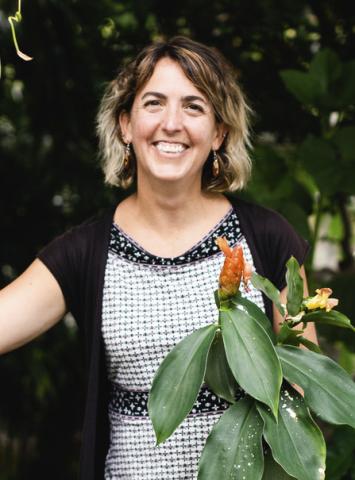
Dr. Chelsea Specht is the Barbara McClintock Professor of Plant Biology and the Associate Director for Faculty Development in the School of Integrative Plant Science. She is a faculty member in the graduate fields of Plant Biology and Ecology and Evolutionary Biology and a faculty fellow of the Atkinson Center for a Sustainable Future. She is also a member of the L.H. Bailey Hortorium and is leading the Biodiversity Initiative at Cornell University (BioICU) as part of the CALS Empowering Biodiversity for People and Planet moonshot, driving innovations in sustainable solutions to the biodiversity crisis. Her collections-based, student-centered research program has been funded by the National Science Foundation since 2001 and includes an NSF CAREER award as well various collaborative awards with a diverse cohort of researchers nationally and internationally.
Dr. Specht received her PhD in Biology from New York University as part of a joint program with the New York Botanical Garden and was a postdoctoral Fellow at the Smithsonian Institution’s National Museum of Natural History. She received a Fulbright Fellowship to study in Bolivia where she ultimately served as Program Officer and Ecoregional Coordinator for the World Wildlife Fund’s Latin American and Caribbean Program. In 2005, she started a faculty position at the University of California, Berkeley. At UC Berkeley she served as Faculty Equity Advisor for the Department of Plant and Microbial Biology; as Chair of the Academic Senate Committee on Diversity, Equity and Campus Climate; and as the Founding Chair of the Academic Senate Committee on Demonstrations and Student Actions. She was also part of the University of California-wide task force on Transforming Graduate Admissions funded by the Mellon Foundation.
In 2017 Dr. Specht moved to Cornell University and was almost immediately (2018-2021) recruited to serve a term on the Faculty Senate as CALS at-large senator. This fueled her passion for senate and service: Dr. Specht served as the inaugural Associate Dean for Diversity and Inclusion for CALS from 2019-2022 and as the Associate Dean of Faculty from 2022-2025. As Associate Dean of Faculty she was responsible for developing mechanisms to support RTE and TT faculty engagement with the Faculty Senate and building structures to streamline committee work across the Faculty Senate and the University Assembly. In support of faculty recruitment and retention, Dr. Specht was a grant writer and served on the steering committee for Cornell’s NIH FIRST award responsible for (a) recruiting 10 new faculty across multiple colleges including CALS and (b) developing and institutionalizing early career mentoring to support faculty as they navigate the pre-tenure years; she serves on the Advisory Council for OFDD and for the Graduate School’s OISE; and served as the Faculty Search Committee Chair for a 2021 CALS Cohort hire resulting in the successful recruitment of 10 new faculty across eight departments, each of whom have established research programs that address science-based solutions to grand challenges in accessibility and inclusion. In her professional life beyond Cornell, Dr. Specht served as the President of the American Society of Plant Taxonomists (2016-2019), Council Member of the Society of Systematic Biologists, and Board Member and Director for Equity and Inclusion for the Botanical Society of America (2020-2023); her work in these positions fostered the role of scientific societies as agents of change.
Candidate Statement:
I believe thriving faculty are the essential engine of academic excellence and public impact. In my various leadership roles, I have demonstrated my commitment to creating an environment where faculty can take intellectual risks, teach brilliantly, and contribute to a university that serves the public good. As Dean of Faculty, I will work with the Faculty Senate, Senators, and Campus-wide Leadership to support the Cornell community in building and sustaining institutional and individual excellence in Research, Teaching, Extension, Service, and Leadership. Through transparency and the maintenance of open lines of communication and consultation, I will center and foster our culture of Shared Governance. I am invested in the role faculty play as Leaders of Institutional Transformation, cultivating a community amongst our students, faculty and staff that puts the academic freedom and welfare of our fellow citizen first and creates a place of “any person…. any study.” This is best achieved by implementing policies and practices that allow for academic innovation and by building meaningful relationships with stakeholders and Trustees that enable each of us to extend our impact beyond Cornell’s quads and halls to the communities and institutions who set societal policies and norms, creating potential for lasting change. I believe we must recognize and reward innovations in collaborative research, teaching, and extension initiatives across all colleges, departments, and programs, and in doing so develop and socialize best practices for engaged mentoring, training, and learning. I am truly humbled to be considered for the opportunity to serve Cornell’s faculty and ensure that our collective wisdom is consistently heard and acted upon to do the greatest good.
Learn More:
https://blogs.cornell.edu/bioicu/
https://cals.cornell.edu/diversity-inclusion/faculty-cohort-hire
https://blogs.cornell.edu/specht/