
Faculty-Elected Trustee Candidates
The Office of the Dean of Faculty states the following regarding the nomination and election of the Faculty-Elected Trustee:
While professors emeritus, if resident in Ithaca, and members of the faculty serving as university administrators, deans, or directors are eligible for nomination, preference shall be given to active members of the faculty who do not hold such offices. If a faculty member currently serving in an administrative role were to receive the most votes and then choose to remain in that administrative role, the Faculty Trustee position would be offered to the next highest vote getter.
Doug Antczak
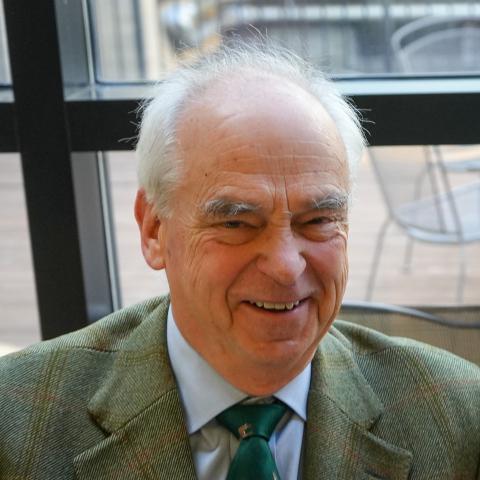
Douglas F. Antczak, VMD, PhD is the Dorothy Havemeyer McConville Professor of Equine Medicine Emeritus. He has broad and deep knowledge of Cornell through his experiences as a former undergraduate, faculty member, administrator, and parent of two Cornell graduates. Following his BA degree from Cornell (A&S, Cornell National Scholar, varsity athlete, Quill and Dagger Society), Dr. Antczak earned a degree in Veterinary Medicine from the University of Pennsylvania and a PhD in Immunology from the University of Cambridge. Since 1978 he has been a faculty member in the College of Veterinary Medicine, with appointments in the Department of Microbiology and Immunology and as a member of the scientific staff of the Baker Institute of Animal Health.
Dr. Antczak’s scholarly work on interactions between mother and fetus during mammalian pregnancy has illuminated mechanisms that protect the developing fetus from immunological rejection by the mother’s immune system. This highly interdisciplinary research encompasses the fields of reproduction, immunology, and genetics. In addition to direct application in reproductive medicine, this work has relevance to our understanding of tumor biology and viral infectious diseases, and for advances in clinical organ transplantation. Dr. Antczak’s research was funded by the US National Institutes of Health for over 30 years. Through his interest in equine genetics, Dr. Antczak became a leading member of the international Horse Genome Project, and he has been a catalyst for international equine research collaborations through a series of workshops that he initiated with the Dorothy Russell Havemeyer Foundation. Internationally, Dr. Antczak has conducted research in the Middle East with colleagues at Weill Cornell Medicine-Qatar and provided support for the City University of Hong Kong’s new College of Veterinary Medicine that Cornell has helped to establish.
Dr. Antczak has supervised 13 graduate students and several post-doctoral fellows and mentored over 50 veterinary students through a Summer Fellowship program that has been a model for similar veterinary student research training initiatives at Cornell and elsewhere. Dr. Antczak has taught in courses for undergraduate, graduate, and professional students.
From 1994 to 2009 Dr. Antczak served as Director of the Baker Institute. This complex position involved faculty recruitment, mentoring and review; oversight of core Institute staff; maintenance, repair and construction of facilities; extensive fundraising from foundations and private individuals; and stewardship of donors. At the University level, Dr. Antczak was a Senator from his academic department and a member of the Financial Policies Committee. Recently transitioned to Emeritus status, Dr. Antczak continues to mentor graduate students and to participate in Baker Institute research. He currently serves on the Faculty Advisory Committee on Athletics and Physical Education (FACAPE), and as a member of the Executive Committee of the Cornell Academics and Professors Emeriti (CAPE).
Candidate Statement:
Positive engagement with the Administration and Trustees is essential if the Faculty are to have a meaningful role in University governance and in helping determine Cornell’s future. As a Faculty-elected Trustee, I would bring long-standing institutional memory to the position, and a commitment to serve as a conduit for exchange of information and views between the Trustees and the Cornell Faculty.
Cornell’s dynamic Ithaca-based programs and initiatives in New York City and abroad offer tremendous opportunities for our faculty to participate more fully in teaching, research, and service activities that can have a positive influence on society and the global environment. At the same time these initiatives present a challenge for the Ithaca based campus to remain relevant in an increasingly urbanized world, and in a fiercely competitive environment in higher education. Recent developments in Washington have raised the prospect of long-term changes in the relationship between the Federal government and universities, including Cornell. Finally, changing perceptions of academia by the public, including Cornell’s alumni and trustees, highlight the need for reasoned dialogue and communication. This is essential if the Faculty are to work in partnership with the Trustees and Administration. My previous experience as Baker Institute Director afforded me many opportunities to explain to the public how the work of my Institute advances knowledge and contributes to society. Through those efforts I have learned to bridge diverse perspectives and interests. I would be honored to serve the Faculty and Cornell as a Faculty-elected Trustee.
Mark Campbell
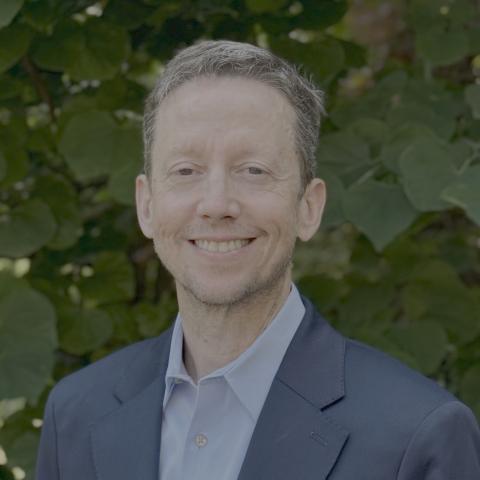
Mark Campbell joined the Sibley School faculty at Cornell in 2001, and is currently the John A. Mellowes '60 Professor of Mechanical and Aerospace Engineering.
Mark’s research and teaching focus are on autonomous systems in space, air, and robotics. He has led multiple collaborative research projects, including a NASA cooperative satellite project and Cornell’s DARPA Urban Challenge self-driving car team, one of six finishers in the race. He has spent sabbaticals in Australia at a robotics center and twice in industry, working with small companies on autonomous systems. He has advised graduate students across a wide range of fields, including Mechanical, Aerospace, Electrical, and Systems Engineering, as well as Computer Science.
Mark has taught at all levels at Cornell, from first-year advising to undergraduate and graduate courses. He helped launch several undergraduate teams with students spanning engineering and business, and he worked with the College of Engineering on strategic planning, fundraising and the growth of student project teams - now involving more than 1,000 undergraduates. More recently, he helped lead an Active Learning Initiative (ALI) project to transform the junior-level curriculum in the department. As part of this effort, he redesigned a required junior course with a lab to incorporate a partially flipped format; in the fall, more than 200 students enrolled in the course. For his efforts and impact in teaching and mentoring, Mark has received a number of awards, including the Stephen H. Weiss Presidential Fellowship.
Mark has served as Associate Director of Graduate Studies (and Director of Graduate Studies) and as the S. C. Thomas Sze Director (Chair) of the Sibley School of Mechanical and Aerospace Engineering. In these leadership roles, he helped guide a school of 60 faculty and staff and more than 700 undergraduate students through initiatives including a revision of the school’s strategic plan, faculty hiring and retention, fundraising, and the renovation of Upson Hall, the primary home of the Sibley School. At the university level, he is currently on the AI Radical Collaboration Advisory Council and the university’s AI Strategy Council. He also collaborated with other Cornell faculty in business, computer science and humanities on the VinUni project, to help develop a new teaching- and research-based university in Hanoi, Vietnam.
Candidate Statement:
I distinctly remember when my wife and I decided to move to Ithaca - we were at Joe’s restaurant after a long day of visiting potential schools and homes. Cornell offered the professional opportunities I was seeking through its students, research, and wonderful collaborating faculty. And Ithaca provided us with a great place to raise our family. It was an easy decision to make Cornell and Ithaca our home - one we have never looked back on.
Since that time, I have been fortunate to experience Cornell from many perspectives - teaching a variety of courses, leading undergraduate project teams in satellites and robotics, redesigning a junior-level lab class as part of the Active Learning Initiative, and conducting research and advising graduate students across engineering and computer science. I have served as Director of Graduate Studies and Department Chair in Mechanical and Aerospace Engineering, which has allowed me to support faculty, staff, and students while navigating challenges such as hiring, growing enrollments, fundraising, and budget pressures.
Having moved across teaching, research, and administration at Cornell, my sincere hope is that these experiences will allow me to bring a unique and broad perspective to the trustees. It is critically important that the ideas, challenges, and opportunities faced by faculty, staff, and students are represented at the trustee level. Likewise, I hope to help communicate trustee discussions and decisions back to the Cornell community, fostering two-way communication that supports thoughtful and informed decision-making. Cornell's diversity of perspectives is one of our greatest strengths and is essential to ensuring we continue to live up to our mission of "any person, any study".
Tara Holm
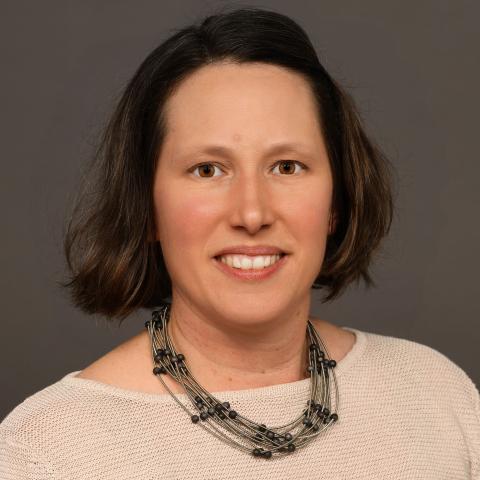
Tara Holm earned her undergraduate degree with a major in Mathematics and a minor in French at Dartmouth College and her PhD in Mathematics at MIT. She has been an NSF Mathematical Sciences Postdoctoral Fellow at UC Berkeley, an Assistant Professor at the University of Connecticut, and is currently Professor and Chair of the Department of Mathematics at Cornell University. Holm’s research in theoretical mathematics focuses on symplectic geometry and its connections to algebraic geometry, topology, and combinatorics. Her work has been sponsored by the National Science Foundation and the Simons Foundation.
At Cornell, Holm led the Math Department’s first Active Learning Initiative project, supporting student engagement in entry-level mathematics courses. As Department Chair, she has enjoyed learning about the diversity of scholarship, teaching and outreach that make up Cornell. She has been particularly focused on graduate student support, a complex teaching mission, and faculty hiring and development. She serves as Faculty Senator for Mathematics and has been grateful for the opportunity to engage with faculty from the Ithaca, Geneva, and Tech campuses. She is a member of the University Faculty Committee, providing guidance and perspective to the Dean of the Faculty.
Holm has been a Smithies Lecturer at Balliol College, Oxford; a von Neumann Fellow at the Institute for Advanced Study; and a Visiting Fellow at Clare Hall, Cambridge. She currently serves on the Scientific Advisory Council of arXiv, on the Board of Transforming Post-Secondary Education in Mathematics (tpsemath.org), and as the President of Pro Mathematica Arte, a non-profit corporation that fosters international exchange through the Budapest Semesters in Mathematics. She is a Fellow of the American Mathematical Society and has been awarded Cornell Arts & Sciences’ Morgan Chia-Wen Sze and Bobbi Josephine Hernandez Distinguished Teaching Prize.
Candidate Statement:
It would be an honor to serve as a Faculty Trustee, a vital role in faculty governance. Through my service to Cornell, particularly in my role as Department Chair of Mathematics and in my experience as a Faculty Senator, I have deepened my understanding of Cornell’s structure, culture, and research, teaching, and extension missions. My experiences in mathematics have given me a deep appreciation for the nature of scholarly inquiry, teaching, and outreach. I am eager to learn more about how different disciplines operate within the University ecosystem and how the University can best foster excellence across our broad intellectual spectrum.
I am proud of my success in advocating for my Department and I am excited to lift my voice more broadly on behalf of the Cornell faculty. I aim to ensure that Cornell remains a community of thriving scholars, sustained by transparent governance, mutual respect, and a shared commitment to Any person … Any Study. I will amplify our diverse faculty perspectives to the Board. I plan to remain engaged with faculty throughout my tenure, both in the Faculty Senate and in more informal settings like Faculty Soup and Faculty Fora, to inform my work as Faculty Trustee.
Learn More:
https://math.cornell.edu/tara-holm
Mark Lewis
I joined the School of Operations Research and Information Engineering in 2005 as an Associate Professor after spending six years in the Department of Industrial and Operations Engineering at the University of Michigan. I was promoted to full professor in 2011 and awarded my current title in 2021. While my primary research direction has been on the dynamic control of queueing systems, I have taken advantage of the broad applicability of operations research and have written papers in wireless communications (electrical engineering), flexible manufacturing (mechanical engineering) and transportation networks (civil engineering). I also occasionally have forays into the more theoretical side of dynamic decision-making under uncertainty using Markov decision processes. My teaching generally focuses on the intersections of mathematical modeling, stochastic processes and decision-making. I have written more than 40 refereed publications, and am responsible for more than $4 million in grant funding.
Among my accolades is the Presidential Early Career Award for Scientists and Engineers (2001) from the National Science Foundation, being the Black History Month Honoree of Mathematically Gifted & Black in 2019, being inducted as a Fellow of the Institute for Operations Research and Management Science (INFORMS) and a Minority Issues Forum Fellow in 2021 (an organization I helped create) and having received the William H. Kadel Alumni Medal for Outstanding Career Achievement Award from Eckerd College 2023. I am currently an Amazon Scholar (since 2024) and am the current President of INFORMS.
My academic leadership experience includes positions at all levels; department, college, university and as a leader (inter-)nationally in the operations research community. In 2015, I was appointed Associate Dean for Diversity and Faculty Development in the College of Engineering. In 2017, I was promoted to Senior Associate Dean (remainder of the title the same). This is the academic affairs dean in charge of promotion and tenure, hiring and mentoring of junior faculty combined with the lead academic on diversity issues. In 2019 I became Director of the School of Operations Research and Information Engineering (ORIE) and stepped down after two terms in 2024.
I am a trusted leader at the university level. In 2017-8 I served as the chair of the Provost’s Committee on Faculty Diversity. This provided a blueprint on how to expand diversity within our faculty. In 2024, I served on the committee to recommend appointment of Cornell’s provost and on an ad hoc committee to help rewrite Cornell’s expressive activity policy. In addition, I serve on the Board of Trustees of the Jacobs Institute. I am also currently a member of the University Faculty Committee, an elected position that serves to advise the provost on interactions with the Faculty Senate.
Candidate Statement:
My experiences in academic leadership and civic engagement outlined in my Bio lead naturally to my interest in being a faculty representative for the Board of Trustees. I have a history of finding ways to bring people together under a common theme. In addition, Cornell’s mission and its obligation as the Land Grant University of New York align with my personal and professional values. My goal as a Faculty Trustee would be to be a bridge between the leadership of the university and its broad set of constituencies in hopes of continuing this legacy.
David Mimno
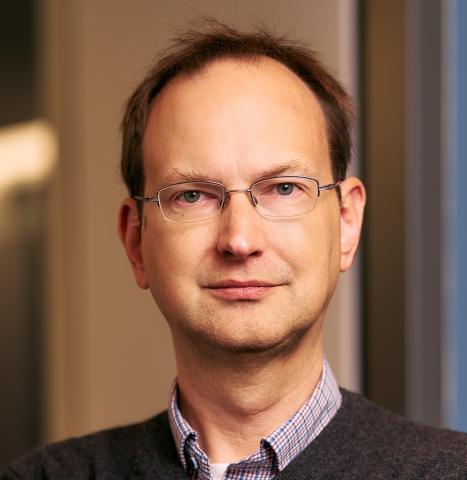
I am a professor in the Bowers College of Computing and Information Science. I've taught courses in data visualization, text mining, and data science. My research is about building computational methodologies that help people learn about culture through documents.
I graduated from Swarthmore College with a major in Latin, a minor in Greek, and a concentration in Computer Science. It wasn't until several years later, after a stint working as a web developer in the dotcom boom, that I discovered an academic field, Natural Language Processing, that combined my love of language and computation. I was particularly fortunate to land a job as a programmer at the Perseus Project at Tufts University, where I developed a web-based reading environment for Greek and Roman texts that is still used today, more than 20 years later. From there I did a PhD in Computer Science at UMass, Amherst and a postdoc at Princeton. I've been a faculty member in Information Science at Cornell since 2013.
I have been chair of the Information Science department since 2024. In this time I have worked to recruit and promote faculty, update our research and teaching in the age of AI, and help faculty in seeking research funding in a complicated environment. I also serve on the faculty advisory board for the Cornell Libraries, where I advocate for support for publication models that value academic labor.
Outside of work, I enjoy cooking, word puzzles, and curling.
Candidate Statement:
My experience puts me in a good position to help trustees understand the issues facing the university. I have worked in machine learning and AI for most of my career. In addition to academic work I was a visiting researcher at Google during a sabbatical. I can provide realistic perspectives about the potential and dangers of AI. There's a lot of hype, and a lot of doom. Both perspectives are important, but the best policy is going to be somewhere in the middle.
I have also worked extensively in digital humanities and computational social science. While I am fundamentally coming from the STEM side, I have a long track record of working across disciplinary lines. I am committed to building connections that break down barriers and value many ways of knowing.
Finally, as a parent of two college-age kids, I can speak to the experience of today's students. Gen Z students have grown up in an environment that is very different in many ways from what I experienced in the 90s, but they are fundamentally still full of creativity, drive, and desire for excellence.
Peidong Sun
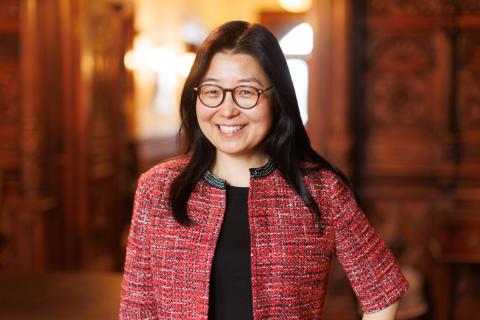
My academic training and career have been shaped by international experience across multiple intellectual and institutional traditions. With doctoral degrees in law from China and sociology from France, and academic work spanning Asian and European universities, I bring a comparative perspective on state-academia relations, higher education and institutional governance that reflects Cornell’s character as an internationally renowned university.
As the Distinguished Associate Professor of Arts & Sciences in China and Asia-Pacific Studies, my research examines institutions, political systems, and global change, with particular attention to China’s authoritarian system and its impact on everyday life, political consciousness, and historical memory from the Mao era to the present. I am the author of two monographs, with a third forthcoming this year, and three additional book projects underway. My 2025 book, Unfiltered Regard for China: French Perspectives from Mao to Xi, examines how professors and universities sustain their academic mission in complex and sometimes constrained environments. This work has shaped my understanding of the conditions that allow great universities to endure and thrive over time.
My work has been published in Chinese, English, and French, reflecting my commitment to transnational and multilingual scholarship. I have held visiting and research positions at leading institutions worldwide, including Harvard, Stanford, Oxford, Sciences Po, Heidelberg, University of Melbourne, and the Chinese University of Hong Kong. I have also taught in China, France, and Germany, an experience that continues to inform my global and comparative approach to research, teaching, and service.
At Cornell, I teach undergraduate and graduate courses on modern China, global Maoism, U.S.-China relations, cross-listed with History, Asian Studies, China and Asia-Pacific Studies, History of Art and Visual Studies, Feminist, Gender, and Sexuality Studies, Asian Languages and Cultures, and Cornell Society for the Humanities. My teaching emphasizes critical inquiry into power, dignity, and historical interpretation in national and global contexts.
As an active, non-administrative faculty member committed to principled governance and the long-term academic future of our university, I contribute to shared governance and institutional life. Since 2023, I have been serving as a Faculty Senator and as member of the Senate Nominations and Elections Committee. I am also a member of the Cornell Humanities Council, a core faculty member of the East Asia Program, China and Asia-Pacific Studies, and a faculty affiliate of the Cornell Institute for China Economic Research, SC Johnson College of Business. Through these roles, I support faculty governance, interdisciplinary collaboration, and the broader academic mission of our university.
These commitments guide how I think about Cornell’s future: a university whose strength depends not only on transformative innovation, but also on intellectual excellence, international leadership, and principled stewardship of its academic mission.
I bring the perspective of a mid-career faculty member with a long-term commitment to Cornell’s future. Having joined Cornell during a period of rapid transformation in higher education, I am mindful of the decisions that will shape our university in the decades ahead. The role of faculty trustee calls for independence, careful listening, and engagement across disciplines, and I would approach it with a collaborative and forward-looking spirit.
Beyond campus life: I cook and hike—good sauce, nice trail—with a 99-year membership at the Cornell Wellness Center, as all employees do. I plan to renew.
Candidate Statement:
I am running for faculty trustee in a moment that demands clear judgment, steady voice, and constructive engagement.
The faculty voices most directly visible to the trustees need to be those of individuals who have a primary commitment to working productively together to achieve our shared goals, and who are ready to listen and learn about perspectives they may not have previously considered.
As faculty trustee, I would represent the tenure-track faculty, RTE faculty, staff, and the broader academic community. My perspective is grounded in a lifetime of learning and listening, and informed deeply by the generosity, kindness, and genuine care I have experienced at Cornell day after day, in ways both heartfelt and profound.
My colleagues/neighbors have made this place a home. When I have had to travel or been overwhelmed, they have offered to mow my lawn, shovel the snow from my sidewalk, and because I don’t drive, have even included me in weekly grocery shopping expeditions. These gestures have been a constant in my life here, and they matter.
Our staff carry the same spirit. When I needed extra chairs for class visitors, Louise, the MAW building caregiver, called a colleague in Uris Hall and found them within half an hour. With quiet efficiency and real care, this is Cornell at work.
And our students remind me why these values matter. Like many colleagues, I receive greeting cards from current and former students every year. One student gave me a bouquet of knitted pink carnations, the same kind she had made for her mother on Mother’s Day. They have been blooming in my reading room ever since.
My parents teach me to return a single drop of kindness with a flowing spring. That is why I run for faculty trustee, to give back to Cornell with all I have, for all it has given me and my family.
Cornell is home, the only one I count on. I run for faculty trustee because I want, when I retire, to say I gave Cornell my best and used the opportunity to build a lasting dialog between the trustees who oversee Cornell’s policies at the very broadest level and the faculty, staff and community who confront the day-to-day challenges.
Together, we can and will succeed.
Together, we will create a more connected, more supportive, stronger Cornell for the future.
Learn More:
https://history.cornell.edu/peidong-sun
https://drive.google.com/drive/folders/1izzcg12UULPZqQBgHnS99E6LG8MdCHAX