
University Faculty Committee (Non-Senator or Senator) Candidates
Paul Fleming
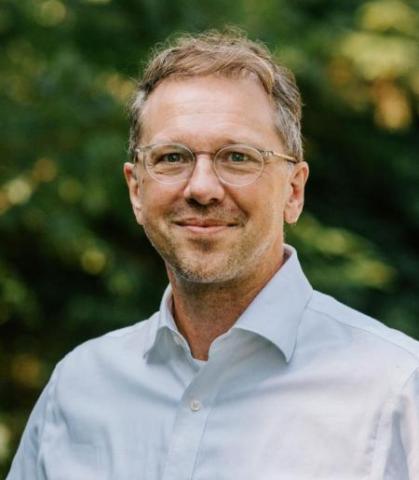
Paul Fleming is the L. Sanford and Jo Mills Reis Professor of Humanities and a member of the Cornell faculty since 2011. He received his undergraduate degree from Brown, majoring in Comparative Literature and Religious Studies. After his BA, he spent two years in Bremen, Germany, on a Fulbright research scholarship, then worked as a secretary for two years before beginning his doctoral work in German Studies at Johns Hopkins University. He was an assistant and associate professor of German at New York University (2001-11), where he served as DUS, DGS, and chair as well as directing the college’s four-year Honors Program involving all A&S departments. Fleming arrived at Cornell in 2011 as a Professor of German Studies and Comparative Literature. At Cornell he directed the Institute for German Cultural Studies (2013-16), was the inaugural chair of the provost’s Radical Collaboration for arts and humanities (2016-2018), co-chaired the faculty library board (2017-20), and directed the Society for the Humanities (2017-2024), where he secured a Mellon grant for a six-year “Rural Humanities” initiative and led the design of and fundraising for the Humanities Scholars Program, a undergraduate research program housed in the Society for the Humanities.
Fleming has published monographs on Exemplarity and Mediocrity: The Art of the Average from Bourgeois Tragedy to Realism (2009) and The Pleasures of Abandonment: Jean Paul and the Life of Humor (2006) and is the translator of Peter Szondi’s Essay on the Tragic (2002), Hans Blumenberg’s Care Crosses the River (2010), and the co-translator of Blumenberg’s Saint Matthew Passion (2021). His research and teaching focuses on eighteenth and nineteenth century German and European literature, Frankfurt School critical theory and its legacies, theories of the comic, and storytelling as a mode of thinking. He has edited or co-edited six volumes and is the editor of the Signale Book Series at Cornell Press as well as the co-editor of Cornell’s New German Critique; he also serves on the editorial board of Cornell’s Diacritics and the Paradigms series at de Gruyter press (a series he co-founded).
Candidate Statement:
The challenges facing Cornell and higher education will not dissipate anytime soon; we are in the midst of a paradigm shift whose outcome is uncertain. If there is a time for faculty and administration to be working together, it is now. In my 25 years as a professor, however, there has been a steady drift of consultation and decision-making away from faculty and towards higher administration. This is not unique to Cornell but, nevertheless, a loss for us all. The University Faculty Committee (UFC) is crucial in this respect: it is the one true interface between the faculty as a collective body (the senate) and the central administration. The UFC serves as an essential site of information exchange, collaboration, and problem solving as well as for holding ourselves to and defending our shared goals, ideals, and mission.
With all the challenges facing higher education today, shared governance is a necessity: the talent, wisdom, and expertise of the Cornell faculty are a crucial resource in turbulent times. As chair of the arts and humanities Radical Collaboration I met regularly with then-provost, now-president Kotlikoff and recently served on the search committee that hired provost Kavita Bala. I am eager to continue this crucial work by being a liaison between the faculty senate and the president, provost, and higher administration as a member of the UFC.
Stacey Langwick
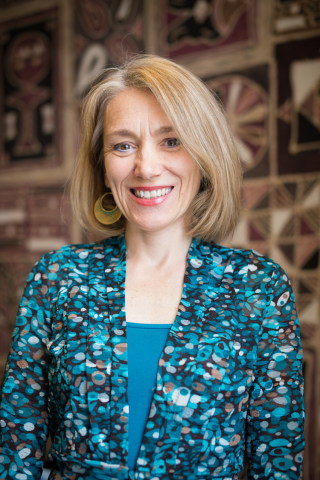
Stacey Langwick, MPH, PhD, has been a faculty member in the Department of Anthropology since 2006. Her research, teaching and program building have focused on healing, medicine and the body in East Africa. She is the author of Bodies, Politics and African Healing: The Matter of Maladies in Tanzania (2011) and Medicines That Feed Us: Plants, Healing and Sovereignty in a Toxic World (2026), as well as co-editor of Medicine, Mobility and Power in Global Africa (2012). Her scholarship is broadly concerned with the politics of knowledge, questions of evidence, and possibilities of care. Most recently, her work has taken up these themes through a range of interlocking issues including the science of traditional medicine in Africa, the afterlives of botanical colonization, the problem of toxicity, the politics of intellectual property, questions of bodily and territorial sovereignty, the work of chronicity and the rise of chronic disease, and the possibilities of gardens in medical education as climate increasingly shapes human health.
Stacey’s scholarship in both the humanities and social sciences, combined with her collaborations across medical and plant sciences, have shaped her contribution to service positions that extend across departments, colleges, and institutions. To date, her service has focused on initiatives that invest in graduate education, foster international partnerships, and advance engaged scholarship that connects the university to broader communities. In her department, Stacey served two terms as Director of Undergraduate Studies and two terms as Director of Graduate Studies. She has also chaired the Public Affairs Committee for three years. At the university level, she served on the Provost’s Committee on Social Science Organizational Structures and was a member of the General Committee of the Graduate School. She also served as a member of the broader Mario Einaudi International Studies Center Advisory Committee and is currently serving as a member of the Steering Committee of the Institute for African Development. For six years (2016-2022), Stacey led the Qualities of Life working group at the Einaudi Center, that cut across the geographic divisions that have historically shaped so much of international studies. From 2006-2023, Stacey was a member of the Global Health Program Advisory Board, and for nearly as long, she was an active member of the International Internship Committee for the Global Health Program in Tanzania.
Stacey teaches classes on medicine, healing, the body, postcolonial science, and Africa at both the undergraduate and graduate levels. In 2019, she was awarded a Stephen Weiss Fellowship for her teaching of undergraduates and the topical concentration in medicine and healing in the Department of Anthropology. She is also an advisor for the cross-college Biology and Society major. Many of her courses are cross-listed with Science and Technology Studies, Feminist and Gender Studies, and Africana Studies and Research Center. She is a member of the graduate fields for these three interdisciplinary programs as well. For this reason, her students come from across the university, including from the colleges of Arts and Sciences, Agriculture, Human Ecology, Engineering, and Art and Architecture.
Candidate Statement:
I am honored to be considered for the Faculty-at-Large position on the University Faculty Committee. I believe strongly in faculty governance as a pivotal piece of university life. I feel pulled to stand for election to the UFC at this time to promote faculty voices, which must be heard as our institution responds to the rapidly shifting landscape of higher education. As universities across the country are finding themselves at an inflection point, robust dialogue, collective reflection and meaningful opportunities for shared governance are particularly important. Since arriving at Cornell, I have often been moved by my colleagues’ commitment to the everyday work of creating an environment for open, rigorous, creative, and impactful teaching and research. If elected to the UFC, I would prioritize listening to the diverse positions from which our extraordinary faculty are navigating the shifting pressures on intellectual life and scholarly work. I would strive to elevate the conversations through which faculty engage with each other and with the university administration. I would commit to protecting spaces in which knowledge can be shared, brave decisions made, values defended, democratic principles upheld, and diversity valued. It would be an honor to amplify the work of our faculty in the advancement of such essential academic and public goods.
Learn More: