
Senator-at-Large (Tenured Faculty) Candidates
Parfait Eloundou-Enyegue
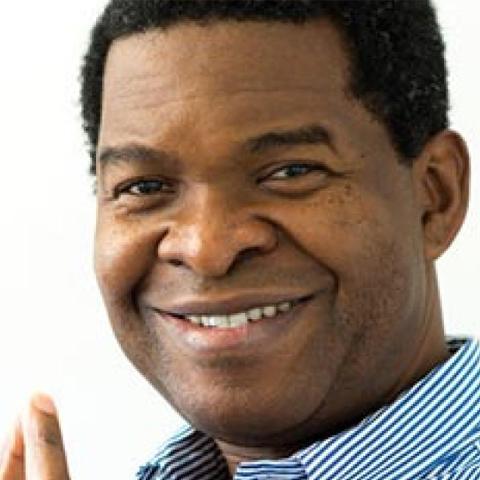
Parfait Martial Eloundou-Enyegue’s research agenda broadly addresses the interrelationships between population, social change, and sustainable development. Under this general theme, his current projects study the effects of contemporary demographic changes on global inequality, education, youth employment, health, food security and internal conflicts. Professor Eloundou-Enyegue’s methodological work advances the use of decomposition methods to reconcile micro-and macro-traditions in quantitative sociological research and to understand the sources of social change.
He has taught across multiple continents, mostly Africa, North America, and Asia, and has extensive experience with field research and policy communication. The Associate Director of the Cornell Population Center, Professor Eloundou-Enyegue has won teaching and prestigious research awards from the Population Association of America and from the Comparative International Education Society; and has received the 2020 Distinguished Alumni Awards from the College of Agriculture at the Pennsylvania State University.
He has consulted with the United Nations, the World Bank and USAID, and has worked on the Board of Directors of several professional associations and institutions, including the Population Association of America, the Population Reference Bureau, the Guttmacher Institute, and the International Union for the Scientific Study of Population. He recently was a member of an independent group of 15 scientists nominated by the UN’s Secretary General Panel to draft the first quadrennial report of the report on Sustainable Development Goals.
Prior to coming to Cornell, he was affiliated with the RAND Corporation and earned a doctorate in Demography and Sociology from the Pennsylvania State University and an advanced degree in Agricultural Economics and Development Sociology from Cameroon.
Seema Golestaneh
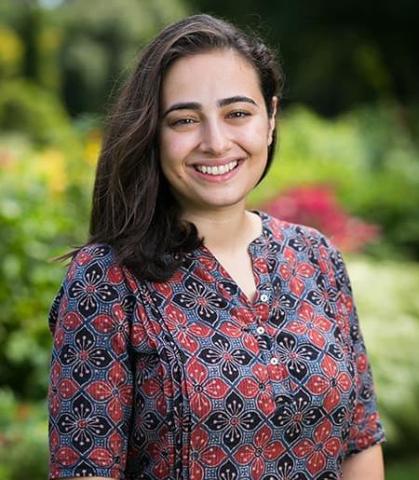
Seema Golestaneh is an associate professor in Cornell’s Department of Near Eastern Studies. My research, situated at the nexus of anthropology and religious studies, is focused on expressions of contemporary Islamic thought in the Persian-speaking world. I am particularly interested in how metaphysical experiences make themselves known in the socio-material realm via aesthetics and epistemology. My forthcoming book, Unknowing and the Everyday: Sufism and Knowledge in Iran, examines the social and material life of gnosis (ma’arifat) for disparate Sufi communities in Iran. Essentially an anthropology of the imagination, my work also relies heavily on textual ethnography and analysis, emphasizing the importance of hermeneutics within the Iranian socio-theological sphere. I am currently at work on a project tentatively entitled Utopia Lost?:Afghan Theories of Radical Poetics and Islamic Governance. Drawing largely from archival materials and oral histories, Utopia Lost investigates the dreams and aspirations of Afghan intellectuals in the late 1980s and 1990s for forms of government that did not come to pass.
I serve on the Board of the Humanities Scholars Program, the Institute for Comparative Modernities, have served as Director of Religious Studies and Director of Einaudi's Southwest Asia and North Africa Program, and am a Bethe House Fellow.
Mani Sethuraman
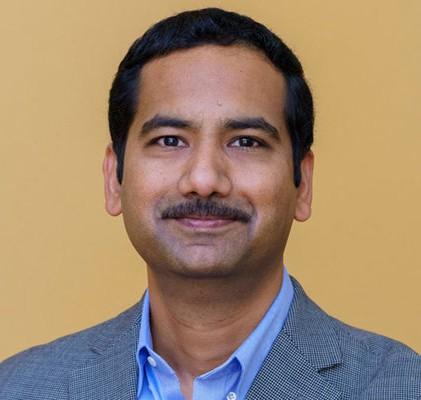
Mani Sethuraman studies the effects of corporate disclosures on capital markets. His research focuses on the various channels through which corporate managers communicate, the complementary role played by intermediaries in reducing information asymmetry, and the specific mechanisms that underpin investor learning. He is currently working on research/teaching paradigms that aim to enhance our understanding of leadership attributes that investors value and to promote responsible/ethical use of AI technologies. Sethuraman is also interested in the application of interdisciplinary techniques such as natural language processing, voice analysis, machine learning, and predictive analytics in accounting and information economics research. His research has been published in several top-tier journals such as Management Science, The Accounting Review, and the Journal of Accounting and Economics, and has been covered by several popular media outlets.
Before joining the Cornell SC Johnson College of Business, Sethuraman obtained his PhD in accounting and MBA from the Fuqua School of Business at Duke University. He has worked for multinational companies such as Citibank and IBM in various capacities. He teaches financial accounting and reporting for undergraduate/graduate programs in the SC Johnson College of Business.
Candidate Statement:
It is an honor to be considered for the University’s Senator-at-Large position. My career thus far has been primarily shaped by my direct exposure to various disciplines such as science, engineering, business, technology, finance, and management through formal academic training and professional experience. As someone that has personally benefitted from interactions with scholars and professionals from varied backgrounds, I am deeply passionate about promoting inter-disciplinary faculty engagement and collaborations that aid our university’s mission to do the greatest good. Educational institutions (as well as our society at large) are facing unprecedented times marked by economic uncertainty, financial constraints, political upheaval, and disruptive technologies. I hope to leverage my multi-disciplinary academic/professional background to help our esteemed institution navigate successfully through this changing landscape and enhance my learning in matters related to faculty governance by actively engaging with experts from other fields within our university system.
Learn More:
https://business.cornell.edu/faculty-research/faculty/ss3647/
Immanuel Trummer
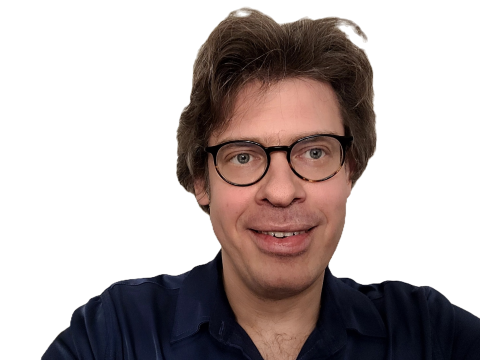
Immanuel Trummer is an associate professor of computer science at Cornell University. His research focuses on making data analysis more efficient and more user-friendly, often leveraging machine learning, in particular, large language models. His papers were selected for "Best of VLDB", "Best of SIGMOD", and the CACM Research Highlight Award. He received an NSF CAREER Award for his work combining large language models with databases and multiple Google Faculty Research Awards.
Candidate Statement:
In these tumultuous times, characterized by political and technological disruption, I would be honored to serve as a Senator-at-Large on the Faculty Senate. My international background, having lived in four different countries over the past two decades, gives me insight into the challenges faced by international students and faculty. My goal is to establish a campus climate that is supportive and welcoming to any person, true to Cornell's founding principle. Through my research, I am intimately familiar with the technologies that are impacting the ways we teach and learn and are likely to figure prominently in our Faculty Senate discussions over the coming years. As a father of two young kids, I care deeply about creating an environment in which faculty parents can thrive.
John Aloysius Zinda
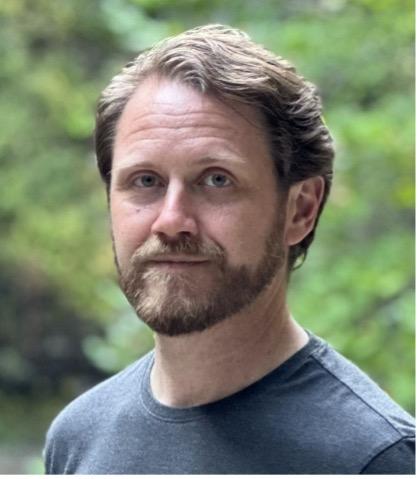
John Aloysius Zinda is an Associate Professor of Global Development at Cornell University. In research on disaster management, he asks how people individually and collectively confront changing hazard risks. He uses both quantitative and qualitative tools to examine household flood insurance and community flood risk reduction, often collaborating with nonacademic partners. He has also examined how people and landscapes in rural China confront developmental and environmental interventions around wildlife conservation, forest regeneration, and rural livelihoods. His training is in sociology and natural resource management.
Candidate Statement:
I am grateful to be considered for the role of faculty senator-at-large. A stint as my department’s faculty senator early in my time at Cornell acquainted me with the body and its role in shared governance. I am committed to strengthening faculty governance and the broad involvement it depends upon. If elected I will do my best to show up in person; to listen well; and to work with others to defend values of equity, free speech, and accountability.